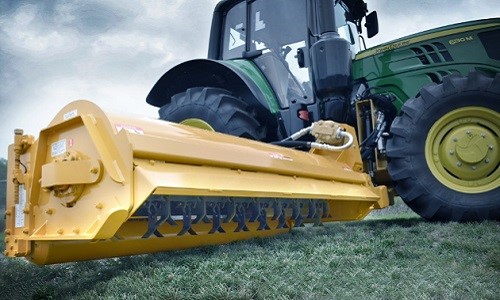
After your shredder makes a pass, walk the field and look down. Do you see long, stringy stalks? Clumps lying in rows? Or a fine, even mat that will break down by spring? The ground tells you more about your knives than any catalog will.
Most growers don’t think about flail shredder knives until the rotor starts shaking or the chop turns ugly. By then the tractor is burning extra diesel and the bearings are paying for it. So, let’s work the other way. Start with the field, the crop, and the machine. Then pick the knife.
A lot of what follows comes from the counter at our Fresno shop. Central Valley growers bring in worn knives every week and ask us the same question: what should I be running?
What a Flail Knife Really Does
A flail shredder spins a horizontal rotor at high speed. The knives hang loose on that rotor from shackles, clevises, or bolts. When the rotor turns, they swing straight out and strike the residue. If they hit a rock or a stump, they fold back and then swing out again.
That is the whole idea. A fixed blade would bend or snap. A flail knife takes the hit and keeps working.
Each knife does two jobs at once. It cuts or smashes the material, and it moves air. The airflow lifts flattened stalks and pushes them into the cutting zone. Change the knife shape, and you change both jobs. That’s why the right knife for a cover crop is the wrong knife for almond brush.
The Main Types of Flail Shredder Knives
Y-Knives
Y-knives run in pairs on a single shackle, so the two blades form a Y. They slice cleanly and spread material evenly. They’re light, they spin up fast, and they don’t demand much horsepower. Use them on cover crops, grass, alfalfa stubble, and lighter vegetable residue.
L-Knives
L-knives have a bent foot at the tip. The foot adds cutting surface and throws more air. When a Y-knife leaves too many long pieces in corn, sorghum, or cotton stalks, an L-knife is usually the fix. L-knives also hold their shape better against thick stems.
Hammer and Cup Knives
These are the heavy hitters. A hammer knife is a thick, cupped block that smashes more than it slices. The cup creates strong suction, which lifts flat pruning off the orchard floor. If you shred almonds, walnuts, or pistachios after winter pruning, or grape canes between vine rows, most growers end up with this knife.
Straight Chopper Knives
Rotary stalk choppers and some older shredders use flat or slightly twisted straight knives. They’re simple, cheap to swap, and work well on standing stalks. You’ll find common fits on our flail shredder and chopper knives page.
Quick Match: What’s on the Ground vs. Which Knife
● Cover crops, grass, and light stubble: Y-knives handle these best.
● Corn, sorghum, and cotton stalks: L-knives cut them shorter and more evenly.
● Orchard pruning, vine canes, and brush: hammer or cup knives give you the weight and lift you need.
● Standing row-crop stalks: straight chopper knives get the job done at a low cost.
Treat this as a starting point. Rocky ground, wet residue, and tractor size can all push you toward a heavier or lighter knife.
How to Choose the Right Flail Shredder Knives?
Start with the Rotor, Not the Knife
A knife that looks right but doesn’t fit is a paperweight. First, note your shredder’s make, model, and cutting width. Check the mounting style (shackle, clevis, or bolt-on), bolt-hole diameter, and how many knives fit in each row. The easiest move is to bring an old knife into the shop. We can measure it and match it in a few minutes.
Pay Attention to Thickness and Steel
Thicker knives last longer in rocky or sandy soil, but they add weight and load to the rotor. Hardened steel holds an edge longer, and some knives have a hard-faced edge for abrasive ground. If you’re running a light shredder, don’t overload it with the heaviest knife on the shelf.
Keep the Rotor in Balance
This is where many growers lose money. Replace knives in full sets, or at least in opposite pairs across the rotor. Mixing worn knives with new ones throws off the weight, which causes vibration, cracked welds, and early bearing failure. Never mix brands on the same rotor, even if the knives look close. Weight differences you can’t see will show up as shaking.
Replace the Hardware Too
Bolts, bushings, and shackles wear out along with the knives. A worn bushing lets a new knife wobble and chew through its own mounting hole. Swapping the hardware at the same time costs a little more today and saves a rotor later.
Think About the Next Pass
Your shredder sets up everything that follows it. Long stringers wrap around a disc gang, and the disc blades ride on top of the trash instead of biting into soil. A fine, even chop lets tillage disc blades cut down and fold the residue under.
We see this all the time. A grower thinks the disc is worn out because the field looks rough after dicing. Before you order replacement disc blades, check your shredder first. Worn knives can make a solid set of agricultural disc blades look bad. Fix the chop, and the disc often runs like new again.
Signs Your Knives Are Done
● Leading edges are rounded over instead of square.
● Chop length is getting longer and less even.
● The tractor works harder and burns more fuel for the same acres.
● You feel a new vibration through the seat.
● Knives are cracked, bent, or worn thin near the mounting hole.
That last sign matters most. A knife that breaks at full rotor speed becomes a projectile, so pull cracked knives right away.
One Stop for the Whole Field
Shredding and dicing work as a team, so it makes sense to service them together. Our shop carries flail knives alongside agricultural disc blades and the rest of our tillage and cultivating components. Bring a worn knife and a worn disc on the same trip. We’ll match both, check stock, and send you home ready for the next pass. If you need replacement disc blades for a specific gang, or tillage disc blades in a certain size or edge style, give us the part number or measurements, and we’ll track them down.
Common Questions
How often should I replace flail shredder knives?
It depends on acres, crop, and soil. Sandy or rocky ground wears knives faster. Check the edges every season, and replace the knives when they’re rounded, or the chop gets long.
Why does my field look rough after dicing?
Worn shredder knives leave long, uneven chops. That residue rides on top of tillage disc blades instead of mixing in. Fix the chop before buying replacement disc blades.
Do disc blades and flail knives wear at the same rate?
Not usually. Wear depends on soil and acres. But dull knives leave rough residue that makes disc blades work harder. Sharp knives protect your agricultural disc blades and your fuel bill.